Find out some of the things that the CSP insurance scheme does not cover.
While the CSP PLI scheme covers most activities within the scope of the profession, there are some clinical exclusions.
This page gives some of the main exclusions but the list is not exhaustive. It does not override the main policy wording; so if at all unsure, do read the full policy documents for all terms and conditions or contact James Hallam for individual advice.
Members who wish to continue treating or using the groups or interventions listed below as part of their practice, must ensure they have alternative indemnity in place from either an employer or as additional insurance.
Treatment of male footballers
The CSP PLI scheme does not provide cover for the treatment of certain male professional footballers, and individual top-up indemnity is not available. This applies to:
- Any male professional football player of any nationality, signed to a club in the English or Scottish Premier or Champions Leagues.
- Any male professional football player of any nationality, signed to a club in the top two leagues of any other non-UK worldwide league.
- Any male professional football player of any nationality, signed to a club in the top two tiers of English or Scottish leagues (or other worldwide football league) and on loan to any UK club in a lower league.
- Male academy players aged 16 years or older of the affected clubs.
- Male players playing for any national/international team anywhere in the world, at all age groups.
The exclusion does not apply to:
- Male players under 16 years of age (unless playing for national teams).
- Any female players.
- Any players signed to league clubs in Wales or Northern Ireland, unless the club plays in the English Premiership or Championship leagues.
- Any other sport.
Spinal Injections
All injection therapy procedures carry risks, but spinal injections involve significantly higher risks, including the possibility of life-changing or catastrophic outcomes.
Many members transition from NHS roles to independent practice, or work across both sectors. However, the NHS provides strict governance, advanced facilities, and supervision for spinal injections—standards that may not be replicated in independent practice settings.
This difference in oversight and support increases the financial risk to the CSP’s professional liability insurance (PLI) scheme if a serious claim arises. Such risks could impact the sustainability and availability of the scheme for all CSP members. For this reason we have excluded:
- General and regional anaesthesia, including peripheral nerve blocks.
- Epidural injections with or without the use of local anaesthetic.
- Spinal and caudal injections.
- Spinal and caudal nerve blocks.
To be clear - 'local anaesthetic' use is not excluded and the of use injection therapy with local anaesthetic into any peripheral joint of the appendicular skeleton is covered subject to policy T&C's. Local nerve blocks in the hand and/or foot are also not excluded.
Medical services
The CSP professional liability insurance (PLI) scheme does not provide cover for 'medical services', for example:
- General Medical Service (GMS)
- Personal Medical Services (PMS)
- Alternative Provider Medical Services (APMS)
These are the three types of GP contract used in England by NHS commissioners for provision of overarching medical services that may include, for example, first contact practitioner (FCP), urgent care, minor injuries, and Out Of Hours services. These services are increasingly being offered by GP practice businesses that engage physiotherapists to deliver some of the clinical care as part of these services under these contracts.
The Clinical Negligence Scheme for GPs (CNSGP) is a state-backed indemnity scheme in England, set up to indemnify these types of 'medical services' delivered under these contract types in primary care.
Some of these 'medical services' under these contract types, for example. Out Of Hours services, are outside the scope of physiotherapy practice and so are not covered by the PLI scheme. However, individual physiotherapists may have the individual capabilities to work in some of the roles offered as part of these contracts. Other services, such as FCP, are within the scope of physiotherapy practice, and so the insurance status depends on how you deliver these services.
This means that CSP members' work in these services may be covered by the CNSGP, providing that you provide your clinical services directly to the contract service provider, even if you are employed or work through, for example, a locum agency or any other employment agency. There should be no cost to members to be covered by the CNSGP.
Get written confirmation of insurance
We advise members who work within these types of primary care 'medical services' to get written confirmation either from the contract service provider directly, or from their locum/employment agency, that the clinical services provided by the member are included within the GMS, PMS and/or APMS contract terms and thus covered by the CNSGP should any claim arise from the member's work.
It is essential that you obtain and retain a copy of the contractual agreement between you and the service provider as this will need to be provided in the event of any claim. A service specification and/or job description is not sufficient.
Members who further choose to contract their services through their own corporate entities (Ltd, Co etc) are advised to take extra care. Seek individual insurance advice to ensure that you have appropriate indemnity in place for your work.
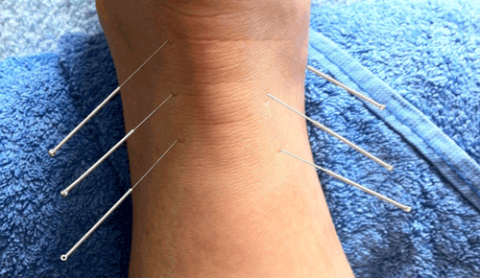
Thoracic acupuncture
Since 1 July 2024 CSP members have needed additional insurance to practise thoracic acupuncture. There are alternative solutions available for CSP members at preferential rates.
Where is the thorax?
The thorax is the part of the human body from the below the neck (below C7 cervical vertebra) and above the abdomen. The thorax includes the anatomical areas bounded by the ribs, the sternum, the spinal vertebra, and the diaphragm. The thoracic area contains the internal thoracic organs including the heart and the lungs, and the scapula which is outside the thoracic cage.
We are not providing a list of excluded points. This is because:
- Nomenclature of points is not consistent across all modalities that use needling techniques – for example, acupuncture, dry-needling and injection-therapy all have different point location naming systems.
- We expect all registered physiotherapists, by virtue of their training in anatomy, to be able to confidently identify where the thorax is and clinically reason whether a needling location lies over, or near to, underlying lung tissue such that pneumothorax is a foreseeable risk to treatment.
Please refer to our Learning from litigation: pneumothorax document for more detailed information.
Have you removed thoracic acupuncture from the scope of physiotherapy practice?
No. Thoracic acupuncture has only been removed from the scope of indemnity cover provided by the CSP PLI scheme. Thoracic acupuncture, like all acupuncture (except for in/fertility), remains within the scope of physiotherapy practice.
Members may continue to use it provided they are educated, trained and competent in the modality and have appropriate indemnity in place from an employer or other indemnity provider.
Which CSP members are affected?
These changes only affect members providing thoracic acupuncture/needling. All other acupuncture/needling remains covered by the PLI scheme, (except acupuncture for in/fertility, which is already excluded), subject to policy terms and conditions. If you work in the NHS or are employed by an independent hospital provider, you may not need to do anything as your indemnity for all the work carried out as part of your employment is provided by your employer. You can continue to provide acupuncture services in line with your service specification.
If you work in independent practice as a private practitioner, either as a sole trader, practice principal or contractor; run your independent practice through a limited company or partnership; or undertake any of your own work outside the scope or your employment, you must ensure you have appropriate insurance in place to undertake thoracic acupuncture.
Why did the CSP make this change with thoracic acupuncture?
Regrettably, the CSP PLI scheme continued to receive a regular and frequent number of claims relating to pneumothorax from the negligent use of acupuncture/needling over the thoracic region. There is no defence to such claims and the CSP PLI scheme paid out a significant sum of money to people harmed by negligent use of acupuncture/needling in the thoracic region.
The CSP needed to take pragmatic risk-management decisions based on balancing the need to provide a viable and sustainable PLI scheme for the majority of members, with the need to contain the costs of the PLI scheme to the CSP as a whole.
What happened after 1 July 2024 for thoracic acupuncture?
Cover is no longer provided for claims relating to the use of thoracic acupuncture/needling. The CSP PLI scheme will continue to provide cover for claims arising from thoracic acupuncture/needling that was undertaken prior to 1 July 2024, subject to the policy terms and conditions.
What about patients with muscle hypertrophy or structural abnormalities of skeletal anatomy around the neck and shoulders?
As with all your patients, you must have an appropriate knowledge of both surface and underlying structural anatomy when you use acupuncture/needling and be able to apply this theoretical knowledge to the specific context, circumstances and presentation of your specific patient.
Where any structural abnormality or physical presentation is actually or potentially present that means you cannot be clear on the location of the underlying thoracic structures, you may wish to consider an alternative intervention to avoid the risk of negligent pneumothorax to your patients.
What if patients demand thoracic acupuncture from me, or say they undertake it at their own risk?
Your duty of care to your patient remains at all times and it cannot be waived or delegated. Patients do not have the right to demand any specific intervention where a healthcare professional does not believe it is clinically appropriate.
Where members believe they are justified in providing thoracic acupuncture services, since 1 July 2024 they have needed alternative insurance for this activity.
Where can I find further information about insurance for thoracic acupuncture?
- AACP members who have undertaken an AACP recognised in-person training programme are automatically covered by additional insurance for thoracic acupuncture provided by the AACP as a member benefit. The AACP offers "Thoracic Acupuncture Safety" courses as well as other CPD courses. Join the AACP. (The AACP insurance only covers thoracic acupuncture and does not conflict with the main CSP scheme in any way.)
- CSP members who can provide evidence that they have undertaken a minimum of 3 days of in-person training in acupuncture and/or dry needling, specifically including the thoracic region and have completed a CPD course at least every two years since initial training can access individual additional cover for thoracic acupuncture via James Hallam.
- CSP members who are business owners and who engage other physiotherapists to provide thoracic acupuncture, can access additional clinic cover provided the business can evidence that each physiotherapist can provide evidence that they have undertaken a minimum of three days of in-person training in acupuncture or dry needling, specifically including the thoracic region and has completed of a C (CPD) course at least every two years since they undertook initial training can access additional clinic cover for thoracic acupuncture via James Hallam
For specific insurance-related enquiries, please contact the CSP insurance brokers James Hallam on 01245 321185.
Treatment of animals
The Association of Chartered Physiotherapists in Animal Therapy (ACPAT) offers a suitable indemnity scheme to its members, which is brokered by James Hallam. This scheme is entirely separate from the main CSP professional liability insurance (PLI) scheme. To be eligible for this cover you must
- Be a CSP member in a 'full-practising' category of membership. If you only work with animals, remember to declare your exemption from mandatory HCPC registration to the CSP.
- Be a member of ACPAT in Category A or Category B.
The ACPAT insurance allows Category A members to engage up to two Category B students to work under under the supervision of the Category A member on a practice placement.
Category B Members can purchase their own individual ACPAT insurance but they must be working in an environment where there is adequate controls and supervision in place and the treatment of the animal is offered in a vet-led process to comply with the Veterinary Act.
- Chartered physiotherapists working with animals do benefit from the CSP Public Liability insurance policy as this covers all areas of work, subject to policy terms and conditions.
- If you only work with animals you do not have to be registered with the Health and Care Professions Council (HCPC). This is because the HCPC only regulates physiotherapists who work with humans.
Complementary, allied and holistic therapies
In 2021, the CSP professional committee decided that complementary, alternative and holistic (CAH) therapies are not within the scope of physiotherapy practice. This means that these interventions are not covered by the CSP professional liability insurance (PLI) scheme.
There are a wide range of CAH therapies. Many CAH therapies do not have a peer-reviewed scientific evidence base, nor any robust current or emergent evidence base for their clinical effectiveness. Historically, there were several professional networks representing CAH therapies but these are no longer recognised by the CSP.
For this reason, the CSP took the decision that modalities defined as complementary, alternative and holistic (CAH) therapies are not part of physiotherapy practice. Physiotherapy is both ‘patient-centered’ and ‘holistic’. However, both concepts are in play only within the remit of the scope of the profession, and these terms do not enable a physiotherapist to undertake CAH therapies in the name of physiotherapy. We expect members to be able to evidence and reason why and how what they are doing links to physiotherapy practice, including the availability of a scientific, peer-reviewed evidence base.
Platelet-rich plasma injections
In 2024, the CSP resolved the number of uncertainties around the legal and regulatory status of platelet-rich plasma injections (PRP) through discussions with the MHRA. A full position statement on PRP is available on request directly from the MHRA which references the relevant provisions within The Human Medicines Regulations (2012).
There is no mechanism, or exemption, by which any individual physiotherapist can manufacture PRP. A supplementary prescriber physiotherapist may request that PRP, as an unlicensed medicine, is manufactured from a licensed manufacturer, to fulfil the special needs of an individual patient under the ‘Specials’ scheme. The ‘Specials’ scheme is not accessible to independent prescriber physiotherapists or non-prescriber physiotherapists.
A doctor may manufacture PRP in a clinic for a named patient, and then direct that a physiotherapist administers it to the same patient, within the same clinical practice, and at point of care for that same patient. While a physiotherapist may administer PRP when directed to do so by a doctor, dentist, nurse independent prescriber, or pharmacist independent prescriber, there is no cover for PRP administration within our PLI policy.
Sexual Misconduct /Criminal allegations & investigations
- There is no cover within the PLI scheme for any claim of sexual misconduct or any criminal allegation and investigation that might arise from an allegation of inappropriate touching of a patient and/or performing an internal examination without consent.
- The CSP offers links to an additional separate criminal defence insurance policy to cover these risks.
- To avoid misunderstanding, you should make sure that your patient fully understands the nature and purpose of any treatment offered, including the extent of any undress and/or touching that may be required and consider whether a chaperone is required.