A guide to this inspection tool for CSP Health and Safety reps
As a CSP Health and Safety Rep, you need to carry out workplace inspections, identify safety risks, and support your colleagues to make your employer act. Body mapping is a powerful tool for doing this.
What is body mapping?
Body mapping is a tried and tested method for getting workers together and collectively identifying how their work might be causing them injury or aggravating preexisting ones. Workers are given a body chart and asked to mark where they have an injury or symptoms of work-related ill-health.
What are the benefits of body mapping?
Physiotherapists are passionate about patient care and often have a 'can do' attitude, even if this means working through pain. Body mapping helps us challenge workplace cultures where 'a good' physio just gets on with the job'. The benefits of body mapping include:
- Bringing members together and helping facilitate discussions about the impact of work on their health;
- Identifying shared problems and collectively agreeing on solutions;
- Providing evidence that can be shared with management to push for change;
- It counts as an inspection and can be covered by facilities time if you have a recognition agreement with your employer
How to do it
Body mapping is not difficult – use the body map chart showing a front and back view of the body.
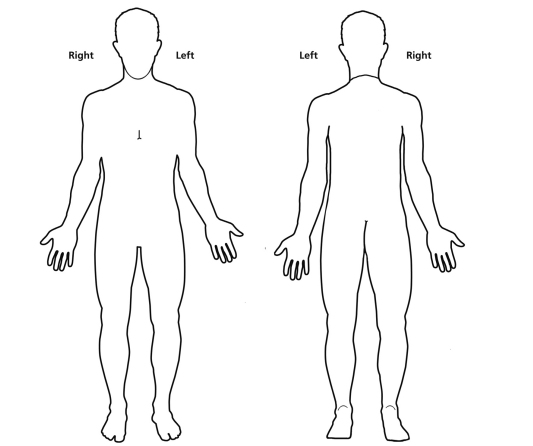
Using coloured pens or stickers, members mark where they experience pain, have injuries or musculoskeletal complaints. Different colours can be used for different problems, for example:
- Red for pain caused by work
- Green for pain caused by something outside work but which is being made worse by work
- Blue for pain someone experiences at work but they are not sure if it was caused by the job or something outside it
To get the best out of body mapping, we recommend you get members to do the exercise together who work in the same service or department. Once members start talking to each other, they are quick to spot common problems and come up with solutions.
By the end of the exercise, it should be possible to spot any significant problems, and sometimes clear clusters might emerge around a body part showing people in the same job are suffering from similar symptoms.
This evidence, along with any solutions recommended by members, can be shared with management and used for risk assessments. More information on risk assessments can be found on the CSP website.
Top tips for facilitating a body mapping session
To get the best out the session, we recommend facilitating a group discussion and asking members these questions:
- Are there pains or injuries shared by the group?
- What types of work or tasks do people think are causing a problem?
- Are people experiencing health problems linked to their symptoms? For example, lack of sleep or headaches linked to musculoskeletal symptoms.
- If someone was injured at work have they completed an incident form?
- In their current post have they been assessed for manual handling risks?
- Have we identified problems that need to be addressed immediately?
What if I cannot get a group together?
If you cannot get a group together, you can get members to do the exercise on their own or put it on your union notice board with a deadline and instructions on how to do it. But this is less effective as the real benefits of body mapping come from bringing members together so they can identify shared problems and solutions.
What should I do after a body mapping session?
After a body mapping session, it is important you share the results with all the members who participated in the exercise. Normally, a body mapping exercise will uncover problems. This means that action will have to be taken to reduce or remove the health and safety risks that have been identified.