As the shift from hospital to community gathers pace in England, CSP members share tips on how to give physiotherapy a voice in neighbourhood health. Tamsin Starr reports
![FLJun26Feature Physio tech Katie Christmas works with patient at Leatherhead Community Hospital exercise class [Lorne Campbell/Guzelian]](/sites/default/files/styles/unstyled_max_width_1200px/public/media-image/2026-05/f50ea11f-55ce-4092-9960-ef5019ff36db.jpg?itok=ZQN7taKT)
The planning and delivery of care is reshaping along neighbourhood lines. But depending on where you are, you may be hearing the language of neighbourhoods without seeing clear opportunities to engage.
Whether integrated neighbourhood teams are long-established or still at the conversation stage, the direction of travel is set. The NHS 10 Year Health plan sets out three shifts – from hospital to community, from treatment to prevention, and from analogue to digital – and neighbourhood health is the organising structure through which all three are expected to happen. For physiotherapy, this presents both an opportunity and a challenge – how to move from being seen as a service to being recognised as an essential function of the neighbourhood system.
![FLJun26 Sarah de Biase at Meridian House,Keighley, West Yorkshire [Lorne Campbell/Guzelian]](/sites/default/files/styles/half_width/public/media-image/2026-05/c8103555-b0a2-4654-83eb-f5b30e06634d.jpg?itok=f4dU-Tr1)
Getting a platform to ensure physiotherapy is properly embedded within the neighbourhood system may be easier for those in formal leadership roles. But CSP members across teams share their advice on the different routes they used to get into the room where decisions are made.
Those who don’t engage risk being left behind. Neighbourhood planning can quickly become narrowly focused on workforce structures and referral pathways if rehabilitation expertise is not included early, or conversations on staffing and access routes can miss out on planning for rehabilitation environments, equipment or recovery spaces.
As Sarah De Biase, senior programme manager improving population health at West Yorkshire ICB, says:
The question now is how actively the profession shapes what comes next.
A system still taking shape
One of the clearest messages from leaders working across neighbourhoods is that there is no one-size-fits-all model.
The national framework sets direction – towards prevention, population health and partnership working – but local systems are interpreting this in different ways. That includes both integrated neighbourhood teams (INTs) and core community and specialist services, which remain central to delivery.
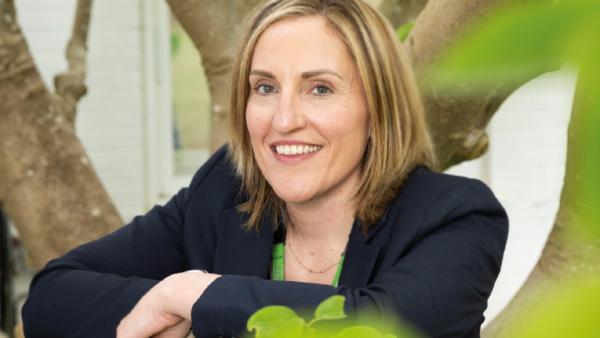
Dee Pratt, consultant physiotherapist and strategic MSK lead at Surrey Downs Health & Care Partnership and neighbourhood health local coach at Surrey East Place, reflects this reality: ‘This is not something that is going to be handed to us, fully formed. It is something we have the chance to shape.’
Getting into the room
If neighbourhood health is being shaped locally, influence depends on being present.
Robin Hewson, head of therapies at Northern Lincolnshire and Goole NHS Trust, is clear: ‘Getting involved has been less about
![FLJun26 Jeremy Gee discusses neighbourhood health with a proactive care team nurse [Lorne Campbell/Guzelian]](/sites/default/files/styles/half_width/public/media-image/2026-05/0a67b012-c792-442e-94cd-49d23c4eba09.jpg?itok=f2lWxu_R)
waiting for an invitation and more about recognising where those conversations are already happening and stepping into them.’
In many areas, those conversations already exist – through frailty networks, long-term condition forums or community service collaborations. But therapy representation is not always there.
‘There were strong nursing voices and system leaders, but not always direct therapy representation,’ Robin recalls. His response was straightforward: contact the leads of those groups directly and ask to be involved. Framing his ask within what matters to the system resulted in a resounding ‘yes’. With his request coming ‘Not from a position of “we should be there,” but “we can support what you’re trying to achieve.”’
As Jeremy Gee, West Yorkshire ICS rehab lead, puts it: ‘The most important conversations are often happening in places that aren’t always obvious. And those with the most influence – hearts and minds – are not always those with the most power.’
Top tips
- Understand where decisions are really being made at place level – not just in formally labelled neighbourhood structures.
- Map your service footprint to neighbourhood populations so your contribution is locally relevant.
- Be clear about what you bring. Link your work to outcomes like admission avoidance, recovery and demand management.
- Start by listening – understand system priorities before offering solutions.
- Build your network deliberately – one meeting leads to others; link into the National Neighbourhood Health Implementation network.
- Don’t wait for permission. If you can contribute, reach out.
Relationships matter
Neighbourhood health does not run on structures alone.
‘Neighbourhood health runs on relationships,’ says Dee. That means working beyond professional boundaries. ‘Some of the most valuable conversations I have had have been outside of physiotherapy altogether with GPs, voluntary sector leads, with local authorities.’
Sarah De Biase reinforces this: ‘Neighbourhood health is built through participation not invitation.’ It often starts with identifying who is already discussing population health and finding ways to support system ambitions. ‘You go to one meeting, and you hear about others where population health challenges are being discussed. Your network expands and with it your ability to contribute.’
Positioning ourselves in the system
To influence neighbourhood health, physiotherapy’s contribution needs to be framed in terms the system recognises. Sarah is direct: ‘The question you will be asked is not what your service does, but what it can and will do to help improve outcomes for specific populations.’
That means rethinking how the profession presents itself. Rehab is a driver of admission avoidance. Physiotherapy is key in preventing risk factors for long-term conditions and keeping people well at work. The profession’s role in health literacy and reducing inequalities is foregrounded. In a commissioning conversation, this reframing can be the difference between physiotherapy being seen as a cost or being seen as a solution – a service that reduces demand elsewhere in the system.
Robin puts it plainly: ‘Therapists are already delivering what neighbourhood health is trying to achieve. The challenge is making that visible.’
From service mindset to population thinking
A useful starting point is reframing how you think about your work – from service to population.
![FLJun26 Janine Ord at NHS Dorset CCG, Poole [Neil Turner]](/sites/default/files/styles/half_width/public/media-image/2026-05/d9ff97b7-8fef-4e8f-9277-7ae724d1d354.jpg?itok=iPu5M82O)
‘One of the biggest changes for me has been moving from thinking about “my service” to thinking about “my population,”’ says Dee. ‘At the centre of this shift is a consistent focus on what matters to the resident by moving conversations beyond clinical symptoms to understanding people’s goals, priorities and the broader factors shaping their health.’
That means asking different questions. Not just how many patients are being seen, but who is not accessing care. Not just what interventions are delivered but why outcomes differ between neighbourhoods.
Janine Ord, head of population health management at NHS Dorset, frames it broadly: ‘Population health asks a different question: what works, at scale, to improve outcomes across a whole community?’
The profession’s behaviour change and self-management skills are central here. ‘We do not just prescribe interventions – we build relationships,’ Janine says. ‘That is what turns efficacy into effectiveness.’ How services connect with and strengthen community assets will be critical to sustaining that impact beyond individual contact.
Understanding your neighbourhoods
Neighbourhood health is inherently local and that means variation matters. Even within small areas, there can be significant differences in population need and outcomes.
On paper, the area might look relatively affluent,’ says Dee, ‘but when you look more closely, there are pockets of deprivation that can easily be overlooked.
Data plays an important role, but it is only part of the picture. Tools such as joint strategic needs assessments, ICB dashboards and public health profiles can help build a picture of where need is greatest and where physiotherapy input could have most impact. But data only goes so far.
‘To really understand a neighbourhood, you have to spend time in it. You have to talk to people and see what is already happening.’
This is particularly important when working with the voluntary, community and social enterprise sector – organisations that have often been supporting people for years without being fully connected into the wider system. Building those relationships takes time, but they are often where the most relevant local intelligence sits.
![FLJun26 Pip Morrant outside Weaverham Clinic, Weaverham Northwich [Mike Poloway]](/sites/default/files/styles/half_width/public/media-image/2026-05/ff05cc23-fb07-4f1e-967c-24f8c0900120.jpg?itok=ibyPPNQJ)
Coaching leadership
Working across neighbourhoods requires a different kind of leadership, so facilitative rather than directive.
‘It is about coaching rather than directing,’ says Dee. ‘Some of the most valuable moments come when the right people are in the room, asking the right questions. In Surrey Downs, this kind of leadership has created space for neighbourhood teams to test, adapt and learn together, recognising that sustainable change comes from shared ownership rather than instruction.’
Pip Morrant, director of community services at Central Cheshire Integrated Care Partnership, takes this further:
Leadership in this space is less about control and more about enablement. You are no longer just leading a service. You are helping to shape a system.
A moment of permission
The 10 Year Health Plan, the push toward community-based care, and the increasing focus on prevention have created conditions that are genuinely favourable for physiotherapy to step into a larger system role. But policy permission and local opportunity are not the same thing. The latter has to be actively sought.
For Pip, the current moment is defined by exactly that opportunity. ‘We are in a period of real flux. And that creates space – space to lead, space to shape, space to do things differently.’
But change requires action. ‘One of the big risks I see is people waiting. Waiting for guidance, waiting for clarity, waiting for someone else to define the model. If you are not part of those conversations, you are not influencing what comes next.’
![FLJun26 : Robin Hewson [Mike Poloway]](/sites/default/files/styles/half_width/public/media-image/2026-05/e10a3505-ef88-4a45-ad57-1e319c134124.jpg?itok=J0cDCzP_)
Start somewhere
For physiotherapists wondering where to begin, the advice is consistent. Start by understanding your system and the population health priorities it is working towards. Find out who is already representing physiotherapy and rehabilitation in those conversations.
‘Start with what the system is trying to achieve and then take practical steps to influence and contribute,’ says Sarah.
Jeremy adds a practical tip. Create a single slide summary showing who you serve, what you do, what outcomes you deliver, where the gaps are, and how this aligns to neighbourhood priorities. Be prepared to take this into neighbourhood conversations to show how physiotherapy is part of achieving population health goals where you are.
Robin emphasises that getting involved does not have to be complicated. ‘Find out what’s happening locally, ask who is leading it, and make contact,’ he stresses. ‘And do not overcomplicate it.’
‘You do not need to have everything figured out,’ adds Dee. ‘Some of the best opportunities come from being curious and asking questions.’
This is physiotherapy’s moment
While neighbourhood health is still evolving, the direction is clear. Care is moving into communities. Services are being organised around populations. Systems are focusing on prevention, recovery and independence.
These are areas where physiotherapy already excels. The structures are forming. The conversations are happening. And the profession has both the skills and the evidence to be central to what comes next. As Janine Ord sums up:
This is one of the biggest opportunities our profession has ever had.
Data, tools and practical resources
- Use what already exists such as joint strategic needs assessments, ICB and place-level dashboards, public health profiles and service data.
- Combine data with clinical insight to identify where intervention will have the greatest effect.
- Use logic models to show impact.
- Define outcomes, map activities and demonstrate how change happens; this supports outcome-based commissioning conversations.
- Look beyond NHS services. Map community assets including voluntary sector organisations, activity and exercise programmes, and social prescribing networks.
- Start with enough to begin a conversation and build from there.
Number of subscribers: 1